What Must Iranian Applicants Show for Danish Residence?
Applying as a founder or highly skilled worker for Denmark remains fiercely competitive. The Danish Agency for International Recruitment and Integration (SIRI) always requests personal documents, bank evidence, and—most important—official translations and proper legalization for every required certificate [find rules directly at SIRI and Danish Business Authority]. The following table details each main requirement and what it means for applicants from Iran:| Requirement | Source Country | Translation & Legalization | Notes for Iranians |
|---|---|---|---|
| Birth certificate | Iran | Certified translation + legalization | Must be stamped by Ministry of Foreign Affairs and Danish Embassy |
| Military exemption/completion card | Iran | Certified translation + legalization | Required for men under a certain age (see below) |
| Police clearance certificate | Iran | Certified translation + legalization | Issued by Iranian police; must be recent |
| Bank transfer proof | Iran or third country | Sometimes | Sanctions complicate direct transfers |
| Educational credentials | Iran | Certified translation + legalization | May require evaluation by Danish authority |
Military Service: What Danish Authorities Expect from Iranian Men
For Iranian men, especially those under 40, Danish immigration looks closely at military service status. SIRI expects one of these documents:- Military service completion card, with certified translation and proper legalization
- Official exemption certificate, also translated and legalized
- On rare occasions, documentation proving you’re not yet called to serve
Key note: Requirements for military documents change; always check the most current details with SIRI before applying.
Sanctions and Iranian Bank Transfers: What Actually Works?
Due to international banking sanctions, direct transfers from Iranian banks to Danish or EU institutions almost always get blocked. As a result, proving funds, moving investment money, or paying necessary fees takes extra effort. Most applicants solve this by:- Opening a bank account in a third country—Turkey, UAE, or Georgia prove popular—to route funds to Denmark
- Getting an official currency exchange certificate in Iran to prove legal origin of funds
- Transferring money via a reliable third party in Europe, with complete documentation and receipts
- Avoiding unofficial money transfer networks or popular app-based services, since Denmark rejects these channels for evidence
Certified Translation and Legalization: Non-Negotiable for Farsi Documents
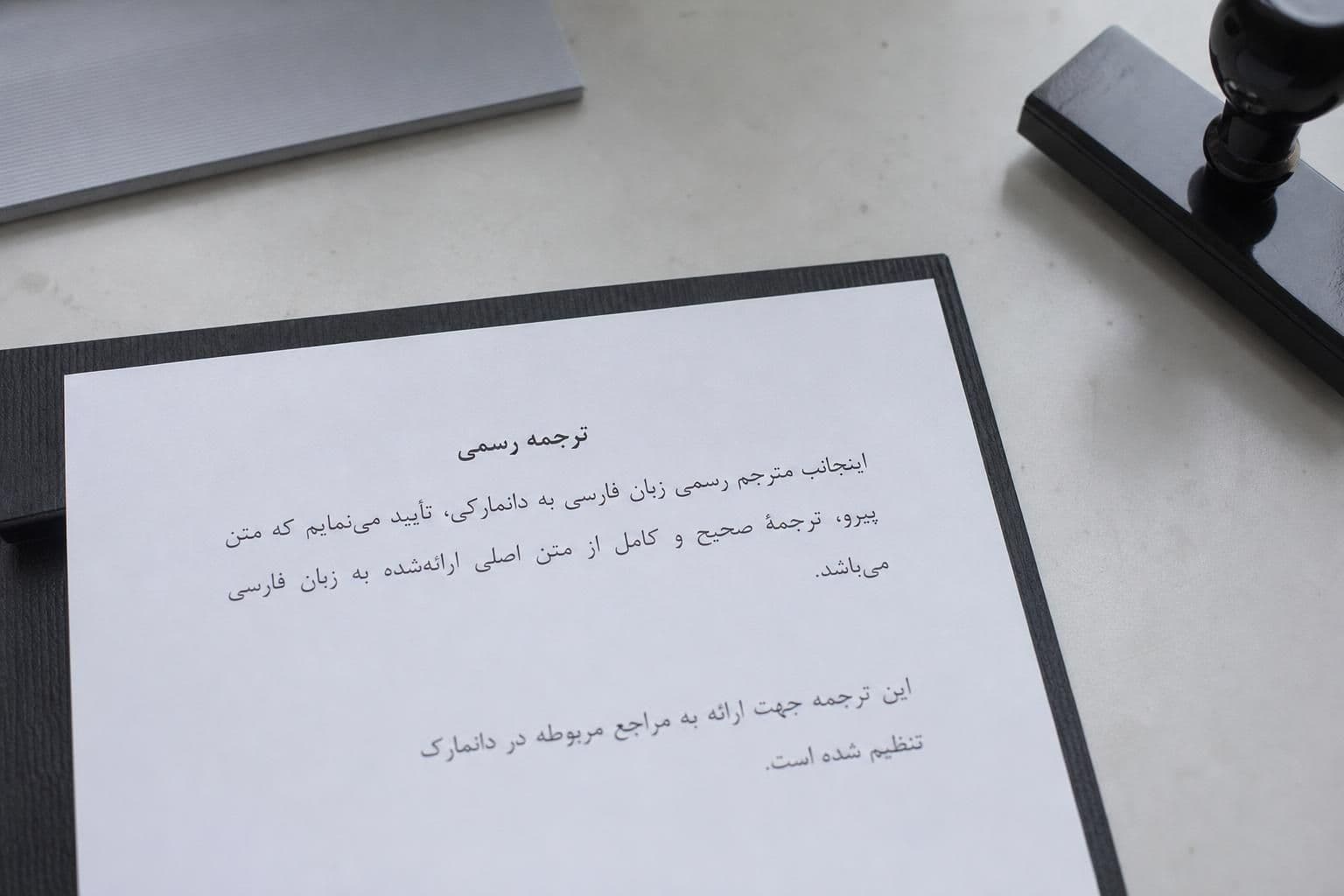
Danish authorities only accept documents that go through full translation and legalization, with each step properly documented. This means:- Using an officially licensed Iranian translator, recognized by the judiciary, for all Farsi documents
- Legalizing the translation at the Iranian Ministry of Justice
- Obtaining the Ministry of Foreign Affairs’ official stamp
- Completing legalization at the Danish Embassy or relevant consulate—either in Tehran or the country where you reside

Police Clearance and Other Background Checks: What Denmark Looks For
Work and residence applications to Denmark require a recent police clearance certificate from each country where you spent six or more months in the last five years, Iran included. The Iranian police clearance (gozaresh-e sabegheh) must complete the same translation and legalization process already described. A lapsed or missing police certificate is a top reason for delays or denials. Those applying from abroad may also need clearance from their current country. Founders often face questions over directorships or business ties in third countries. SIRI may ask for extra background checks; prepare all relevant files in advance.Can You Apply from Iran or a Third Country?
Submitting from Iran is an option, but many applicants choose Turkey, UAE, or another third country for logistical reasons—often making banking simpler. Whether you apply from Iran or elsewhere, your supporting documents must always meet Danish standards. Key notes for out-of-country applicants:- Some Danish embassies issue decisions quicker than others—confirm processing times with SIRI
- Applicants based outside Iran may need additional police clearance and legalization steps locally
- Keep current, official proof of your legal status in the application country
What to Do Next: Building a Strong Danish Case
Strong applications from Iranians always rest on flawless legal paperwork, a detailed “iranian-practicalities” plan, and a business plan tailored for Danish investors. For those needing help with business steps, consult our business plan and pitch deck services or review the scope of Danish options at Immigrate to Denmark. Monitor official updates via the Danish Agency for International Recruitment and Integration and Danish Business Authority for each programme.Key note: Startup Visa Roads provides business-focused support—plans, pitch decks, financial models, founder mentoring—but is not a law firm or registered immigration consultancy. For case-specific legal questions, consult a qualified authority or lawyer.
RECOMMENDED READING
Mapping Denmark’s Startup Ecosystem for Founders and Professionals
A practical, data-driven guide for founders and skilled professionals evaluating Denmark as a landing point, with sector insights, investor profiles, and actionable steps for non-EU applicants.